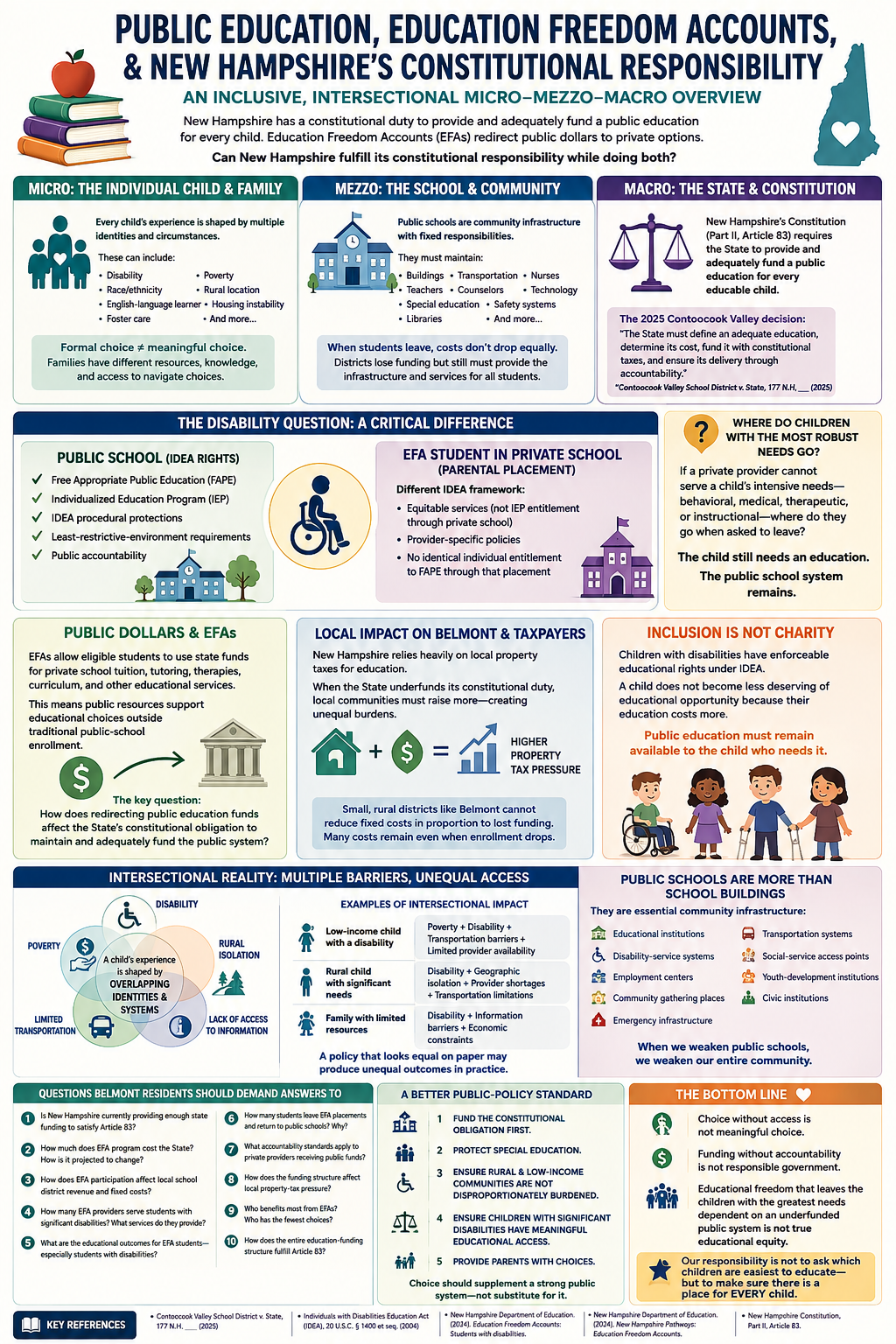

There is a bigger conversation we need to have about public education in New Hampshire—and it is bigger than whether your kid likes their school, whether you think standardized testing tells the whole story, whether you prefer public schools or private schools, or whether one particular district has made good or bad decisions.
The question is what happens when we slowly erode the public infrastructure that is supposed to educate an entire population.
Because a public school is not simply a building where children sit in classrooms.
It is an infrastructure.
It is teachers, paraprofessionals, special educators, school psychologists, nurses, counselors, librarians, transportation, technology, facilities, maintenance, curriculum, extracurricular activities, career and technical education, meals, athletics, arts, administrative systems, special education services, and the institutional capacity to accept every child who walks through the door.
And New Hampshire’s own Supreme Court has now said something remarkably important: the State has not fulfilled its constitutional obligation to adequately fund the opportunity for an adequate public education. (Contoocook Valley School District v. State, 2025).
That should not be a partisan talking point.
It should be a giant flashing “pay attention” sign.
First: What do we actually mean by “public-school infrastructure”?
When people hear “infrastructure,” they often picture roads, bridges, water systems, or a crumbling municipal building.
But infrastructure is also the network of people, institutions, facilities, and public systems that allow a community to function.
A public school system is one of those systems.
The New Hampshire Supreme Court’s 2025 Contoocook Valley School District v. State decision is particularly important because the case did not merely ask whether schools wanted more money. The Court examined whether the State had actually determined and funded the cost of providing the opportunity for a constitutionally adequate education.
The Court affirmed the lower court’s conclusion that the statutory base adequacy amount was constitutionally deficient and found a significant funding shortfall between the State’s base adequacy funding and the demonstrated costs associated with providing an adequate education (Contoocook Valley School District v. State, 2025).
And here’s the part I think New Hampshire residents need to sit with:
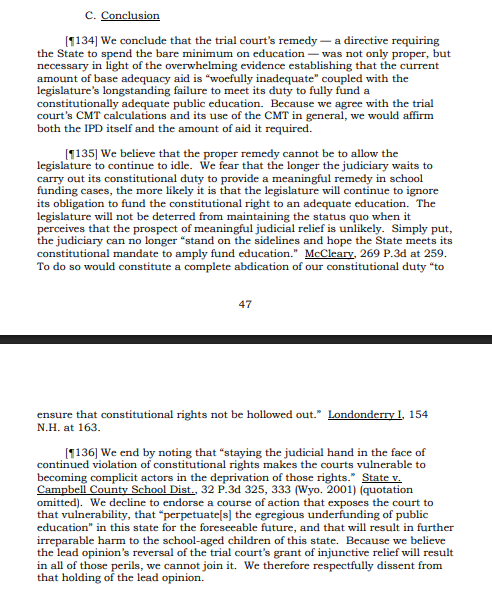
This is not an argument being invented by Facebook activists. The New Hampshire Supreme Court itself identified a constitutional deficiency in the State’s public-school funding structure.
The Court nevertheless reversed the trial court’s immediate payment directive because of separation-of-powers concerns. In other words, the Court recognized the funding problem while leaving the remedy primarily to the legislative and executive branches (Contoocook Valley School District v. State, 2025).
That distinction matters.
The Court did not say, “New Hampshire’s public schools are unconstitutional.”
It said the State’s statutory base adequacy funding was constitutionally deficient.
Those are not the same statement.
And if we want to have an intellectually honest conversation, we need to keep that distinction.
The uncomfortable part: “Adequacy” is not the same thing as what a school actually costs
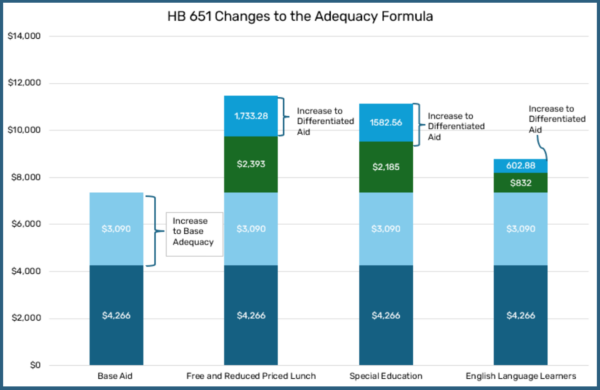
New Hampshire’s current funding formula provides a base adequacy amount per pupil, supplemented by differentiated aid for certain student characteristics.
For State Fiscal Year 2026, the base adequacy amount is $4,265.64 per pupil, with additional allocations for students eligible for free or reduced-price meals, students receiving special education services, and English language learners (New Hampshire Department of Education, 2025).
That is state adequacy aid.
It is not the same thing as the total amount it costs a district to educate a child.
And that distinction is absolutely crucial.
The Contoocook Valley litigation examined evidence showing that New Hampshire districts were spending considerably more than the State’s base adequacy amount. The Supreme Court’s opinion noted that statewide average public-school expenditures were approximately $19,400 per pupil in 2021–2022 and that no district reported spending less than $14,000 per pupil that year (Contoocook Valley School District v. State, 2025).
So when someone says:
“But New Hampshire spends thousands of dollars per student!”
the appropriate response is:
Yes. Now show me who is paying for it.
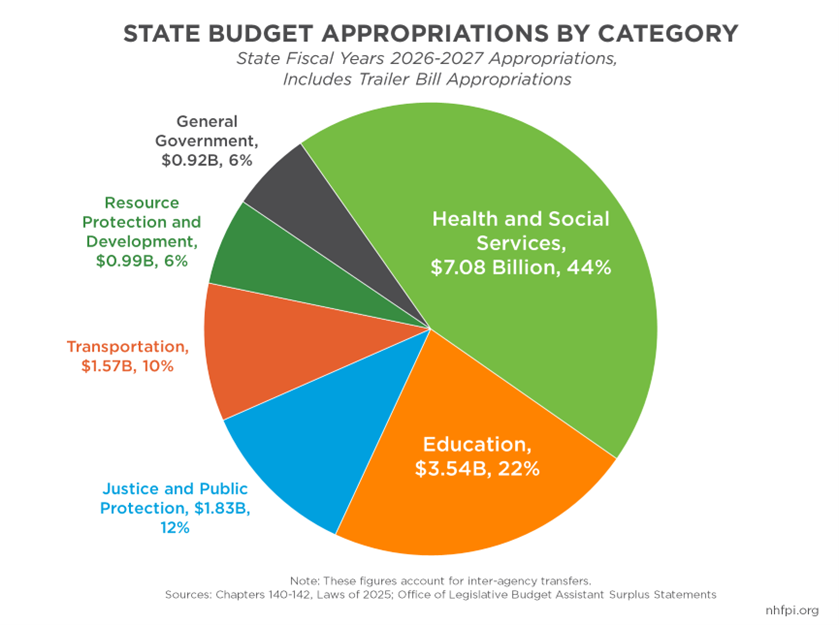
Because the constitutional question is not simply whether money exists somewhere in the education ecosystem.
It is whether the State is meeting its constitutional obligation to determine and adequately fund the opportunity for an adequate education.
New Hampshire’s public schools are heavily dependent on local property wealth
This is where the conversation becomes much more complicated.
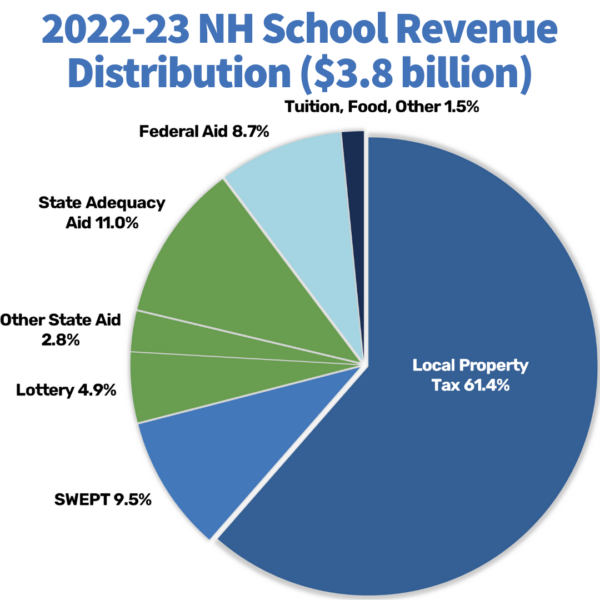
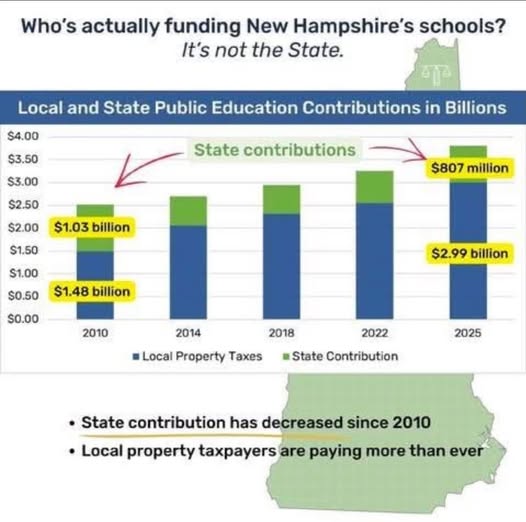
New Hampshire’s public education system is substantially dependent on local property taxation.
The New Hampshire Fiscal Policy Institute reported that property taxes raised locally accounted for approximately 61% of public-school district revenue in the 2023–2024 school year. Including the Statewide Education Property Tax, which is raised and retained locally, approximately 70% of local public education revenue came from property taxes raised locally (New Hampshire Fiscal Policy Institute [NHFPI], 2025).
That means the capacity of a community to support its schools is deeply connected to its property-tax base.
And property wealth is not distributed equally.
A community with expensive real estate and substantial taxable property can generate considerably more revenue from a given tax rate than a community with a much smaller tax base.
That creates an intersection between:
education + geography + income + property wealth + municipal capacity.
And that is where the macro-level problem begins.
MACRO: The State builds an education system on unequal local foundations
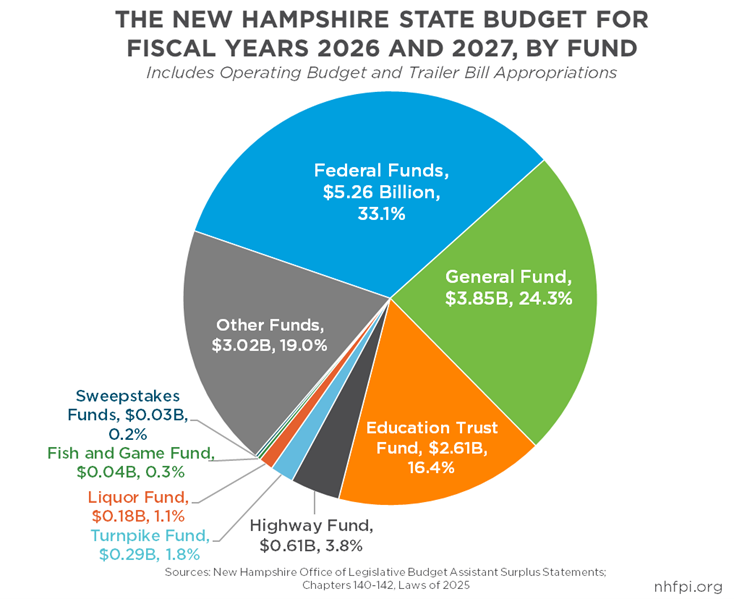
At the macro level, New Hampshire has created a complicated funding system that attempts to account for differences in student need and community wealth.
The State provides base adequacy aid.
It provides differentiated aid.
It provides additional programs such as Extraordinary Needs Grants.
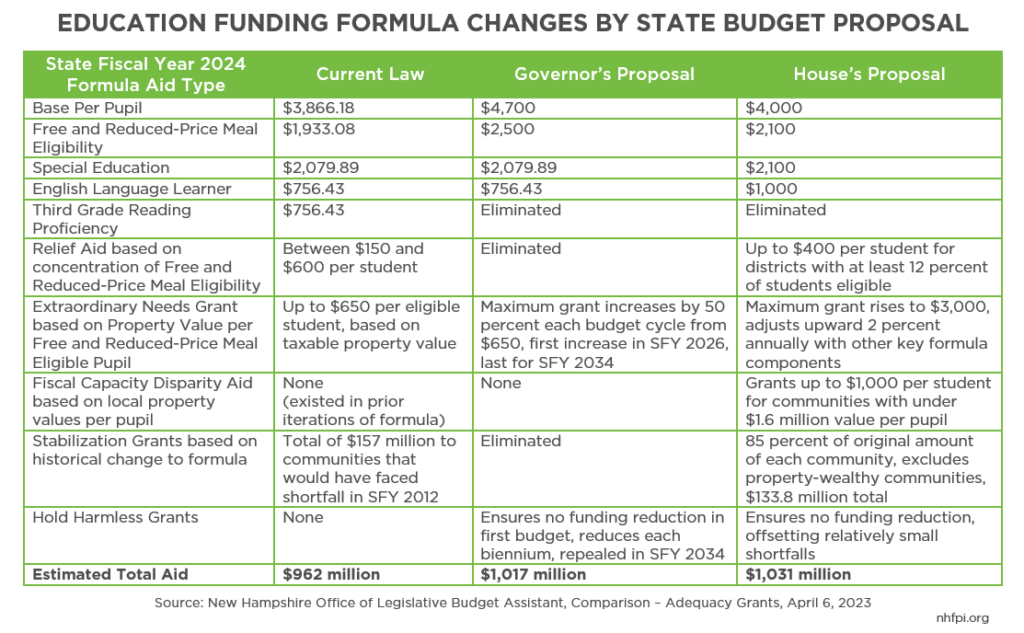
It has used Hold Harmless funding to temporarily protect communities from abrupt losses created by changes in the education funding formula.
And it has now begun phasing those transitional protections out.
NHFPI reported that 145 municipalities experienced a decline in State Adequate Education Aid between SFY 2025 and SFY 2026. Of those communities, 109 did not receive enough Extraordinary Needs funding to offset the 20% reduction in Hold Harmless funding, and 83 experienced an overall reduction in State Adequate Education Aid (NHFPI, 2026).
That does not mean 83 school districts suddenly lost 83 entire programs.
It means the State’s distribution formula produced lower overall adequacy aid for those municipalities.
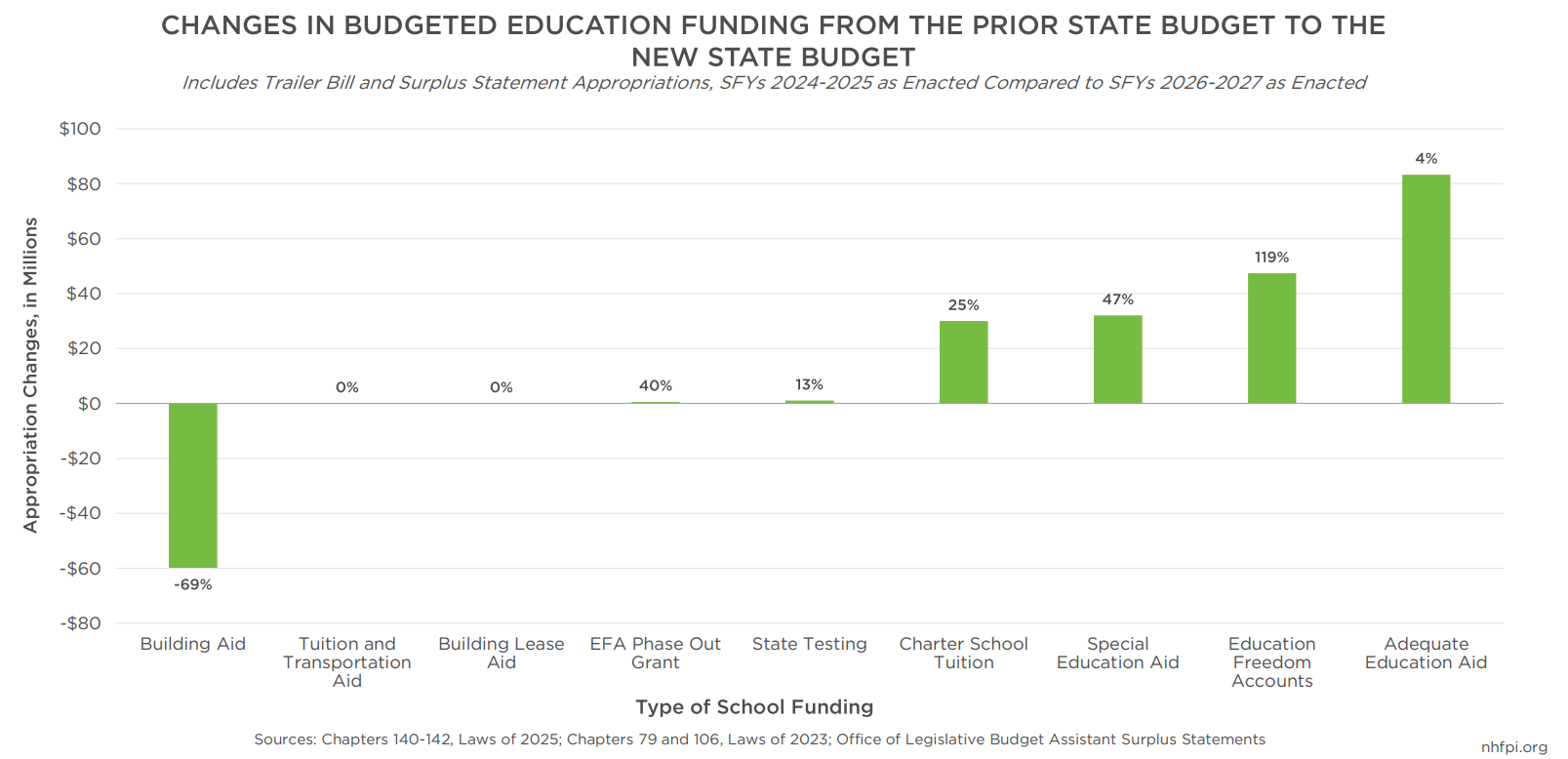
That distinction matters.
But so does what happens next.
Because when the State reduces a revenue stream, the local government still has bills.
The building still needs heat.
The bus still needs fuel.
The roof still needs repair.
The special educator still needs to be paid.
The school psychologist still needs to exist.
The nurse still needs to be there.
The student with a disability still needs their legally required services.
And the child who needs speech-language services does not become less expensive because the State’s funding formula changed.
The cost does not disappear simply because the revenue source changes.
It moves.
And that is where “program cuts” become an infrastructure question
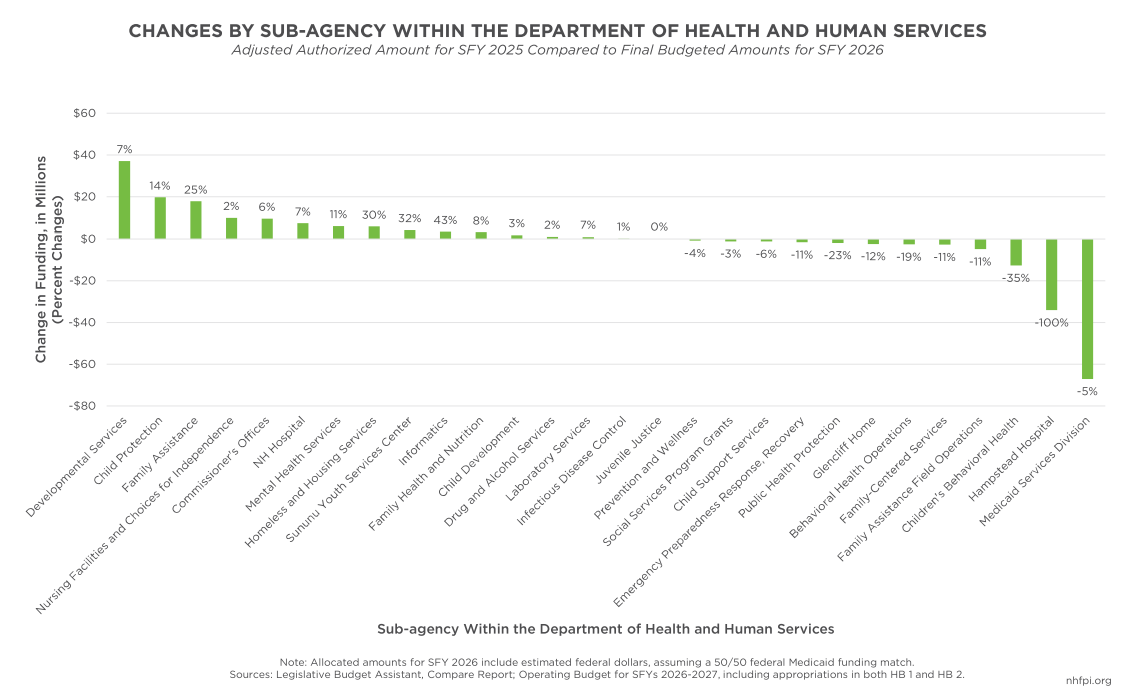
When a school district faces financial pressure, it does not necessarily announce:
“We are dismantling public education.”
Instead, erosion tends to happen incrementally.
A position isn’t replaced.
A class is consolidated.
A counselor serves more students.
A paraprofessional is reassigned.
A library program becomes less robust.
Transportation becomes more difficult.
Maintenance gets deferred.
An extracurricular activity disappears.
A vocational offering becomes harder to sustain.
A special-interest program is eliminated.
A building project is delayed.
A district relies increasingly on local taxpayers.
And eventually someone looks around and says:
“Why doesn’t our school offer what it used to?”
That is what infrastructure erosion looks like.
Not necessarily one catastrophic event.
A thousand small substitutions.
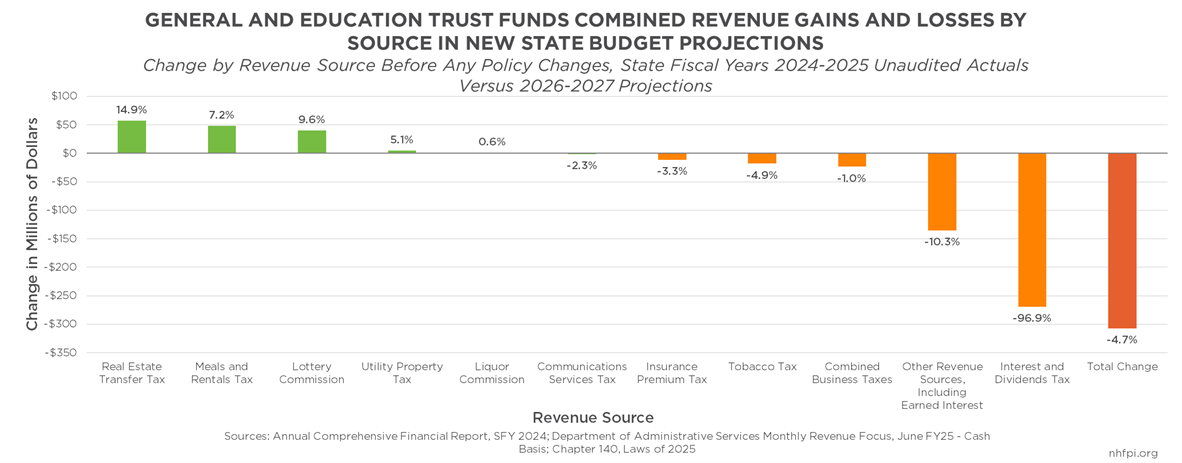
MICRO: What does this look like for an individual child?
This is where an intersectional framework becomes essential.
A child does not experience “education funding” as a line item in a state budget.
They experience it as:
- whether there is a teacher in the classroom;
- whether they have a school counselor;
- whether someone answers when they ask for help;
- whether their bus arrives;
- whether their classroom is physically accessible;
- whether they receive speech or occupational therapy;
- whether they can participate in athletics;
- whether they can access advanced coursework;
- whether there is a librarian;
- whether they have access to technology;
- whether they can participate in music, theater, art, or CTE;
- whether the school can accommodate their disability;
- whether they have a safe and functional building;
- and whether there are enough adults to actually know them.
For a child without additional barriers, losing one program may be frustrating.
For a child with intersecting barriers, the same reduction can have a substantially different effect.
Consider a student who is:
low-income + disabled + rural + transportation-dependent.
The loss of one school-based service can create several simultaneous barriers.
If transportation is reduced, access to school activities may decline.
If a specialized program disappears, traveling to another location may become necessary.
If transportation is unavailable, the family may need to provide it.
If the family cannot provide it, the opportunity effectively disappears.
That is an intersectional effect.
Crenshaw’s (1989) framework reminds us that systems cannot always be understood by examining one category of disadvantage in isolation. Social conditions interact.
So when we ask:
“Does this funding decision affect students?”
the better question is:
Which students experience the greatest consequences, and what barriers compound for them?
Disability makes this especially important
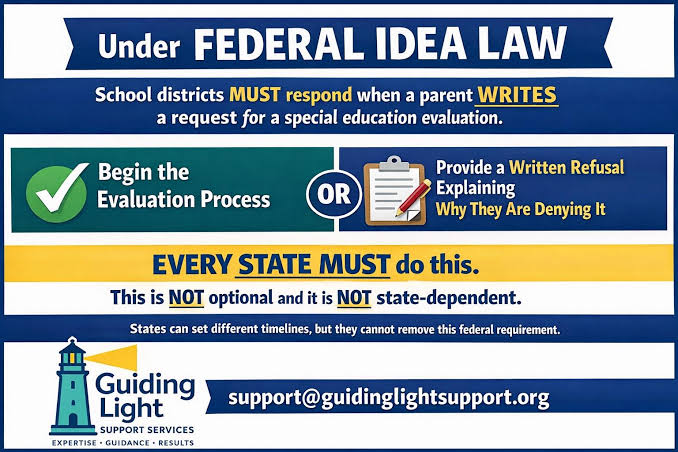
Public schools operate under a legal framework that creates enforceable obligations to students with disabilities.
The Individuals with Disabilities Education Act (IDEA) establishes federal requirements concerning special education and related services for eligible children with disabilities (Individuals with Disabilities Education Act, 2004; U.S. Department of Education, n.d.).
That does not mean every educational setting has identical legal obligations.
And this is precisely where conversations about Education Freedom Accounts need more nuance.
New Hampshire’s EFA system allows participating families to use funds for qualifying educational expenses, including certain private-school and specialized services (N.H. Rev. Stat. § 194-F).
But an EFA-funded private placement does not automatically transform the private provider into a public school or public agency with every obligation imposed upon public schools under IDEA.
The U.S. Department of Education specifically distinguishes the rights of parentally placed private-school students with disabilities from the rights of students served by public agencies under IDEA
(U.S. Department of Education, Office of Special Education Programs, 2022).
New Hampshire’s Department of Education similarly recognizes distinctions concerning students with disabilities participating in EFAs
(New Hampshire Department of Education, 2024).
That means the important question is not:
“Are private schools evil?”
Nor is it:
“Are public schools perfect?”
Neither statement is useful.
The useful question is:
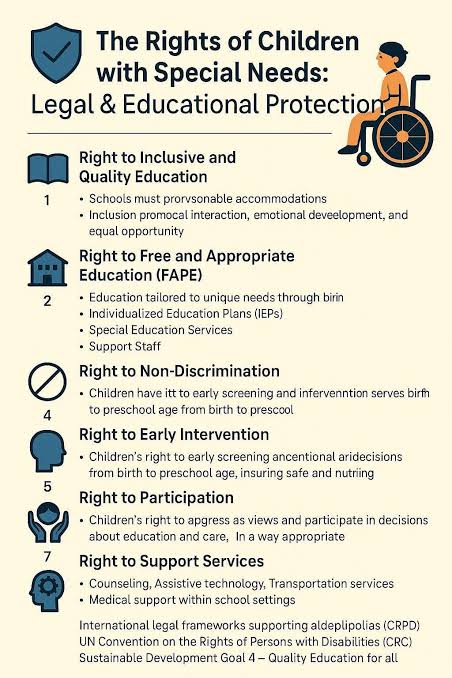
When a child with significant educational needs leaves the public system, who remains legally responsible for ensuring the full set of educational protections that would otherwise apply?
That is an accountability question.
And it is an infrastructure question.
MEZZO: Schools are institutions, not collections of individual classrooms
At the mezzo level, we need to look at the school district itself.
A district is an ecosystem.
Its ability to provide services depends on relationships among:
- school boards;
- administrators;
- educators;
- specialized personnel;
- transportation systems;
- municipal government;
- taxpayers;
- state funding;
- federal funding;
- families;
- community organizations;
- and local facilities.
If one part becomes financially unstable, the effects can spread.
This is why it is misleading to treat every program as an isolated budget line.
A school psychologist is not merely “a school psychologist.”
They are part of the infrastructure supporting students with behavioral, emotional, developmental, and educational needs.
A nurse is not simply “someone in the health office.”
They are infrastructure.
A paraprofessional is not merely “extra classroom help.”
For many students with disabilities, that adult may be the difference between meaningful access and exclusion.
A bus driver is infrastructure.
A librarian is infrastructure.
A custodian is infrastructure.
A guidance counselor is infrastructure.
A special educator is infrastructure.
A CTE instructor is infrastructure.
A functioning roof is infrastructure.
The public school is the network.
And New Hampshire’s own funding litigation recognized those cost drivers
The Contoocook Valley litigation examined evidence concerning the actual components required to deliver an adequate education.
Those included teachers, non-teaching staff, instructional materials, technology, professional development, transportation, and facilities operation and maintenance (Contoocook Valley School District v. State, 2025).
That list is revealing.
Because look at what is on it:
People. Materials. Technology. Transportation. Buildings. Maintenance.
In other words:
infrastructure.
You cannot maintain a functioning public institution by funding only the theoretical cost of putting a student in a seat.
The infrastructure surrounding that seat has costs too.
Special education exposes the structural problem
Special education is an especially useful case study because the costs can vary dramatically between students.
New Hampshire’s education funding formula provides differentiated aid for students with IEPs.
But that differentiated aid is not necessarily the actual cost of providing the student’s services.
NHFPI explains that the differentiated special-education allocation is intended to help offset the higher costs districts may incur; it does not necessarily represent the full cost of special education for an individual student (NHFPI, 2025).
New Hampshire also has a separate Special Education Aid program for students whose educational costs exceed specified thresholds.
Under current policy, school districts are responsible for costs below 3.5 times the State’s estimated average per-pupil expenditure, while the State provides reimbursement for portions of costs above that threshold (NHFPI, 2025).
That is an important recognition by the State:
some students cost substantially more to educate than others.
But it also demonstrates why “per-pupil funding” can become an inadequate shorthand.
A student is not a spreadsheet average.
A student with intensive medical, behavioral, communication, mobility, or educational needs can require dramatically different resources than another student.
Rural New Hampshire makes the problem even more complicated
Now add geography.
A rural district may have fewer students while still needing:
- a school building;
- transportation;
- administrative personnel;
- special education staff;
- nurses;
- counselors;
- technology;
- maintenance;
- heating;
- food service;
- extracurricular infrastructure;
- and specialized services.
Many of those costs are relatively fixed.
If enrollment falls, the district cannot necessarily reduce its expenses proportionally.
A school building does not become 20% cheaper because enrollment falls 20%.
A bus route does not necessarily become 20% cheaper.
A heating system does not become 20% cheaper.
A special education obligation does not disappear because a district has fewer students.
NHFPI reported that New Hampshire’s public-school enrollment has declined substantially over the long term, with approximately 45,000 fewer students than in 2002–2003. The decline reflects broader demographic changes, including a substantial reduction in the State’s child population (NHFPI, 2025).
This creates an uncomfortable fiscal problem:
New Hampshire is attempting to fund a geographically dispersed public infrastructure while the number of students is declining and the ability of communities to generate revenue varies dramatically.
That is not a simple “schools spend too much” problem.
It is a systems-design problem.
MACRO: The State is changing the architecture of school funding
This is where we need to stop looking at individual budget lines and look at the larger architecture.
New Hampshire has been moving away from some broad-based stabilization mechanisms and toward more targeted forms of aid.
NHFPI’s 2026 analysis found that the State is phasing out Hold Harmless funding while using mechanisms such as Extraordinary Needs Grants and Fiscal Capacity Disparity Aid to target communities according to combinations of student need and taxable property wealth (NHFPI, 2026).
That can produce very different outcomes between municipalities.
Some communities lose.
Some gain.
Some experience little change.
And that means the statewide education budget can appear relatively stable while individual communities experience very different fiscal circumstances.
This is why:
“The State increased education spending”
does not automatically mean:
“Every public school has more capacity.”
Both things can theoretically be true at the same time.
The property-tax paradox
Here is another piece of the puzzle.
If the State relies heavily on local property taxation, then communities with different property wealth have different capacities to finance education.
But if property values rise, a community may also become less eligible for certain targeted forms of State aid.
NHFPI’s analysis of Extraordinary Needs funding demonstrates this dynamic.
The program uses a community’s taxable property value relative to its number of students eligible for free or reduced-price meals.
As property wealth per eligible student rises, Extraordinary Needs funding declines and eventually disappears at the upper threshold (NHFPI, 2026).
That creates an important policy tension:
A community can have substantial educational needs while simultaneously becoming less eligible for targeted State aid because its taxable property base has increased.
Again:
Not necessarily because someone “took money away.”
Not necessarily because the State is deliberately trying to hurt a particular town.
But because the formula changes the distribution of responsibility.
And when State responsibility changes, local responsibility can become more consequential.
What about school buildings?
This conversation also has to include physical infrastructure.
New Hampshire has a Public School Infrastructure Fund and a separate school-building-aid system.
State law allows infrastructure funding for needs including building deficiencies, accessibility requirements, school transportation vehicles, and other public-school infrastructure needs (N.H. Rev. Stat. § 198:15-y).
State rules also require districts seeking school-building aid to document facility conditions, needs assessments, maintenance practices, capital planning, energy use, project costs, debt, and other information (N.H. Department of Education, 2025).
That sounds reassuring.
But notice what it also tells us:
The State itself recognizes that school facilities require long-term capital planning and maintenance.
Infrastructure does not maintain itself.
And New Hampshire has historically imposed limits on school-building aid. Current statute caps regular school-building-aid grants at $50 million per fiscal year, absent legislative authorization for something different (N.H. Rev. Stat. § 198:15-a).
NHFPI’s analysis of the 2026–2027 budget also reported a 66% reduction in school-building-aid funding from SFY 2025 adjusted authorized levels to SFY 2026, amounting to approximately $29 million (NHFPI, 2025).
That does not mean every school building suddenly lost $29 million.
It means the State’s aggregate school-building-aid appropriation changed substantially.
And that matters because deferred capital investment has a habit of becoming more expensive later.
“But if enrollment is declining, why not just consolidate?”
Because consolidation is not merely a spreadsheet decision.
It affects:
- transportation times;
- community identity;
- access to extracurriculars;
- family schedules;
- special education logistics;
- staffing;
- property values;
- municipal budgets;
- rural accessibility;
- and children’s daily experience.
For some communities, consolidation may be reasonable.
For others, it may create new costs or barriers.
Again:
the question is not whether consolidation is inherently good or bad.
The question is whether New Hampshire is accounting for the full social and economic cost of restructuring public educational infrastructure.
And then there is the EFA question
This is where I want to be particularly careful.
New Hampshire’s Education Freedom Accounts are not literally called a “voucher program” in statute.
They are Education Freedom Accounts.
But functionally, they create a mechanism through which public education funding follows an eligible student into qualifying educational expenses outside the traditional district public-school structure (N.H. Rev. Stat. § 194-F).
That distinction in terminology should not prevent us from examining the fiscal architecture.
And it also does not mean every EFA dollar would otherwise have gone directly to a particular public school.
That would be an oversimplification.
The real question is:
What happens to public educational infrastructure when the State expands multiple education-delivery systems while the traditional public-school system continues to carry universal obligations?
That is a much more serious question.
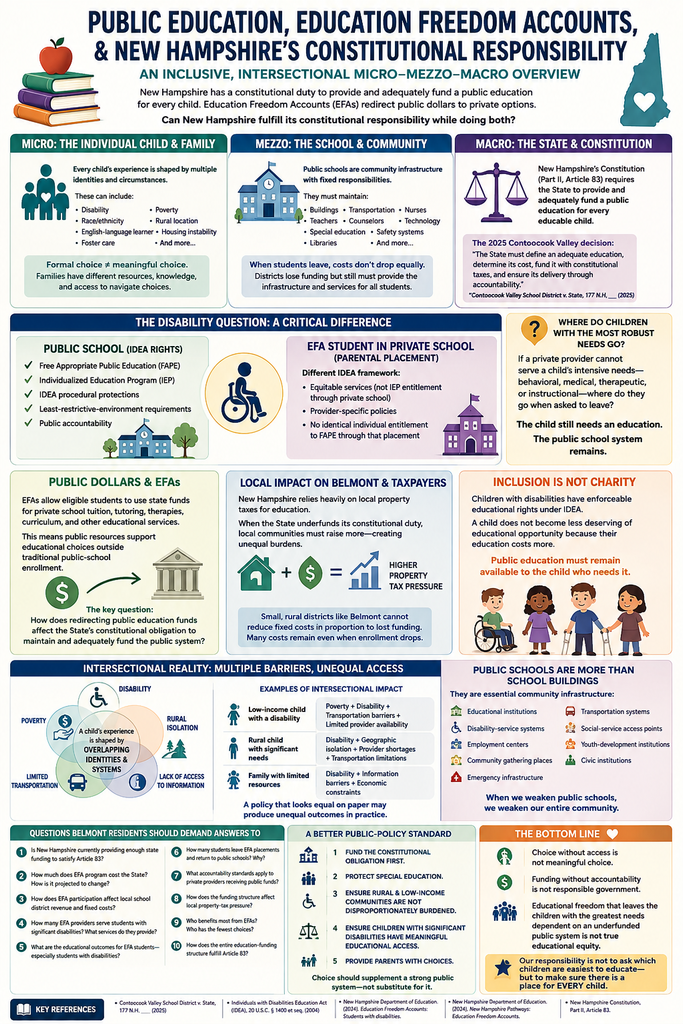
Public schools cannot simply say “we don’t take that child”
This is perhaps the most fundamental structural distinction.
Public schools are designed to be universal public institutions.
They educate children with:
- disabilities;
- significant medical needs;
- behavioral challenges;
- language differences;
- poverty;
- transportation barriers;
- homelessness;
- unstable family circumstances;
- advanced academic needs;
- developmental differences;
- and virtually every combination thereof.
That universal responsibility is expensive.
But it is also the defining characteristic of public infrastructure.
We don’t tell the fire department:
“You can choose which houses you want to protect.”
We don’t tell the public library:
“Only residents who are easy to serve may enter.”
We don’t tell the road department:
“We’ll maintain the roads that are profitable and leave the others alone.”
Public infrastructure exists precisely because individual market transactions cannot reliably produce universal access.
Education is no different.
The intersectional reality
This is where the micro, mezzo, and macro levels converge.
MICRO — The child
At the micro level, funding decisions affect a child’s actual access to:
- instruction;
- disability services;
- transportation;
- counseling;
- technology;
- meals;
- extracurricular activities;
- advanced learning;
- vocational education;
- safe facilities;
- and relationships with supportive adults.
The impact is not evenly distributed.
A child with substantial resources at home may have alternatives.
A child whose family cannot provide transportation, tutoring, technology, private therapy, or supplemental educational opportunities may not.
That is the first layer of inequality.
MEZZO — The family, school, and community
At the mezzo level, families and schools absorb the consequences.
If a program disappears, parents may compensate.
But parents do not have equal resources.
One family can pay for tutoring.
Another cannot.
One family can drive an hour.
Another works two jobs.
One family can privately obtain occupational therapy.
Another depends on the school system.
One family can purchase a laptop.
Another cannot.
One family can relocate.
Another is rooted in a rural community with limited housing options.
The same policy can therefore produce very different consequences depending on the family’s social and economic position.
That is intersectionality in practice.
MACRO — The State’s policy architecture
At the macro level, these outcomes are shaped by:
- constitutional obligations;
- state appropriations;
- education funding formulas;
- property taxation;
- special education law;
- federal IDEA requirements;
- EFA policy;
- school-building aid;
- demographic change;
- municipal fiscal capacity;
- and political decisions about what constitutes an adequate public education.
The macro system determines the resources available to schools.
The mezzo system determines how institutions absorb those resources.
The micro system determines how children experience the consequences.
You cannot understand one level without examining the others.
This is also an equity issue—but not a simple one
An intersectional analysis does not mean assuming every disadvantaged group experiences every policy in exactly the same way.
It means asking:
Who is positioned to absorb the consequences when public systems become less robust?
That includes students with disabilities.
It includes low-income families.
It includes rural families.
It includes English learners.
It includes students experiencing homelessness or housing instability.
It includes families without flexible work schedules.
It includes children whose parents cannot provide private transportation.
It includes students whose educational needs are expensive or specialized.
It also includes families who genuinely believe a different educational environment is better for their child.
Those interests can coexist.
Supporting public infrastructure does not require pretending that every public school is excellent.
Supporting educational choice does not require pretending that private alternatives carry identical public obligations.
We can hold both truths simultaneously.
The DC voucher evidence also deserves context
One common argument in education debates is that school choice automatically improves educational outcomes.
The evidence is more complicated.
The federal Institute of Education Sciences’ evaluation of the DC Opportunity Scholarship Program found that, after three years, the program did not produce statistically significant improvements in overall student achievement in reading or mathematics, although the evaluation examined a specific program, population, and time period and therefore should not be generalized automatically to every school-choice program (Webber et al., 2019).
That does not prove school choice “doesn’t work.”
It demonstrates something much more useful:
educational policy should be evaluated on actual outcomes rather than assumptions.
The same standard should apply to public schools.
The same standard should apply to EFAs.
The same standard should apply to charter schools.
The same standard should apply to private schools.
And the same standard should apply to state funding formulas.
The accountability question
Here’s where I think New Hampshire residents should become very uncomfortable with simplistic arguments from either direction.
The question should not be:
“Are public schools good?”
Nor:
“Are private schools good?”
Nor:
“Are EFAs good?”
Those are enormous categories containing thousands of individual experiences.
Instead:
What public outcomes are we purchasing?
What obligations accompany the public dollars?
Who is accountable when outcomes fail?
What protections follow the child?
What happens when a child has a disability?
What happens when a family cannot provide transportation?
What happens when a rural community loses enrollment?
What happens when a school building needs millions of dollars in capital investment?
What happens when local property wealth cannot support the cost?
What happens when the State’s formula reduces aid?
And what happens when a community can no longer afford to maintain the same educational infrastructure?
Those are questions worth answering with data.
“Follow the money” is necessary—but not sufficient
If we’re serious about understanding New Hampshire education policy, we need to stop treating “education funding” as one giant bucket.
We need to trace the fiscal pipeline.
STEP 1: Where does the money originate?
Look at:
- State taxes;
- local property taxes;
- SWEPT;
- Education Trust Fund revenues;
- federal education funding;
- municipal revenues;
- grants;
- and other appropriations.
STEP 2: How is the State calculating need?
Look at:
- ADM;
- base adequacy;
- free/reduced-price meal eligibility;
- IEP status;
- English-language learner status;
- property wealth;
- Extraordinary Needs;
- Fiscal Capacity Disparity;
- and other statutory formulas.
STEP 3: Where does the money go?
Separate:
- district public schools;
- public charter schools;
- special education reimbursement;
- school-building aid;
- Education Freedom Accounts;
- and other education programs.
STEP 4: What obligations accompany the money?
This is the piece we talk about far too little.
Ask:
What must the recipient provide in exchange for the public funding?
STEP 5: What happens when the money is insufficient?
Who fills the gap?
The State?
The municipality?
The taxpayer?
The family?
The school?
The nonprofit sector?
Or does the service simply disappear?
That final question is where infrastructure erosion becomes visible.
The most important distinction: spending versus capacity
A school district can technically spend more money while having less capacity.
For example:
If transportation costs rise dramatically, more money may be spent simply maintaining existing bus service.
If special education costs rise, additional funding may be consumed maintaining legally required services rather than creating new programs.
If insurance, utilities, salaries, and maintenance rise, nominally larger budgets may purchase fewer discretionary services.
So:
More spending ≠ more capacity.
And:
Less State aid ≠ an immediate one-for-one program cut.
But:
Repeated fiscal pressure can reduce institutional capacity over time.
That is the structural argument.
This is what I mean by erosion
I’m not arguing that someone wakes up one morning and says:
“Let’s destroy New Hampshire’s public schools.”
That is neither supported by the evidence nor a useful way to understand public policy.
Erosion is usually much less dramatic.
It looks like:
one fewer position.
one fewer program.
one more shared staff member.
one more deferred repair.
one more transportation problem.
one more class eliminated.
one more family forced to find an outside service.
one more child whose needs require a workaround instead of a robust public system.
Each individual decision can be rationalized.
The cumulative effect is what deserves scrutiny.
And the future cost may not appear on today’s school budget
This is the part that should concern every taxpayer, regardless of ideology.
Public infrastructure has a maintenance problem.
When we defer maintenance on a bridge, the bridge does not become free.
When we defer maintenance on a school, the school does not become free.
When we eliminate a support position, the underlying student need does not necessarily disappear.
When we reduce transportation access, the geographic barrier does not disappear.
When we fail to invest in educator pipelines, staffing shortages do not disappear.
When we shift responsibility from public institutions to individual families, the social cost does not disappear.
It moves somewhere else.
Sometimes onto parents.
Sometimes onto municipalities.
Sometimes onto nonprofits.
Sometimes onto other public agencies.
Sometimes onto children.
And sometimes onto taxpayers later, when the problem has become more expensive.
So what should New Hampshire residents actually demand?
Not blind loyalty to public schools.
Not blind loyalty to private schools.
Not blind loyalty to EFAs.
Not blind loyalty to any political party.
We should demand evidence.
Show us the funding formula.
Show us the actual fiscal pipeline.
Show us what the State says an adequate education costs.
Show us what it actually costs districts to provide it.
Show us which costs are fixed.
Show us which costs are variable.
Show us the facility needs.
Show us the special education obligations.
Show us transportation costs.
Show us enrollment projections.
Show us staffing vacancies.
Show us program reductions.
Show us who benefits.
Show us who absorbs the cost.
Show us what accountability follows the money.
And most importantly:
Show us what happens to the child who has nowhere else to go.
Because public education is not merely a service
It is easy to think of public education as something government purchases for individual families.
But public schools produce a broader public infrastructure.
They educate future workers.
They prepare future voters.
They provide disability supports.
They create social connections.
They provide meals and transportation.
They employ thousands of people.
They maintain physical facilities.
They anchor communities.
They support families.
They develop the human capital upon which local economies depend.
And they serve children whose circumstances may make every other option less accessible.
That is why the question is bigger than:
“Did my kid get a good education?”
The question is:
What kind of public educational infrastructure are we leaving to the next generation of New Hampshire residents?
The Pucker Punch
Here’s my concern:
We keep talking about education as if we’re choosing between competing products.
Public school.
Private school.
Charter school.
Homeschool.
EFA.
Pick your flavor.
But that’s not really what we’re dealing with.
We’re dealing with a public system that has universal responsibilities, sitting inside a State funding structure that relies heavily on local property wealth, while the State has been repeatedly modifying how education dollars are distributed and simultaneously expanding pathways outside traditional district schools.
Those pathways may provide meaningful opportunities for some families.
They may also create legitimate questions about accountability, equity, fiscal sustainability, and the distribution of public obligations.
Both things can be true.
And if we’re serious about New Hampshire’s future, we need to stop asking:
“Which school do you like?”
and start asking:
“What public educational infrastructure does New Hampshire actually intend to maintain?”
Because once a public institution has been slowly stripped of people, programs, facilities, transportation, specialized services, and stable funding, telling families that they have “choice” does not automatically mean the underlying public infrastructure is healthy.
Choice is not the same thing as capacity.
A grant is not the same thing as a guarantee.
A funding formula is not the same thing as a fully funded obligation.
And a school building is not the same thing as a public-school system.
New Hampshire’s Supreme Court has already told us that the State’s existing base adequacy funding has a constitutional deficiency (Contoocook Valley School District v. State, 2025).
So perhaps the question we should be asking now is not:
“How little can we spend while technically keeping the doors open?”
It should be:
“What does New Hampshire need to invest today if we actually intend to leave our children a functioning public education infrastructure tomorrow?”
Because children aren’t infrastructure.
But the systems we build—or fail to maintain—for them absolutely are.
New Hampshire Supreme Court decision in Contoocook Valley School District v. State
NH Fiscal Policy Institute — Education in New Hampshire: Fiscal Policies in 2025
NH Fiscal Policy Institute — 2026–2027 State Budget analysis
New Hampshire Public School Infrastructure Fund statute
References
Claremont School District & others v. Governor & others, 142 N.H. 462 (1997).
Contoocook Valley School District v. State, 2025 N.H. 29 (N.H. 2025).
Crenshaw, K. (1989). Demarginalizing the intersection of race and sex: A Black feminist critique of antidiscrimination doctrine, feminist theory and antiracist politics. University of Chicago Legal Forum, 1989(1), 139–167.
Individuals with Disabilities Education Act, 20 U.S.C. §§ 1400–1482 (2004).
New Hampshire Constitution, pt. II, art. 83. (n.d.).
New Hampshire Department of Education. (2024). Education Freedom Accounts: Students with disabilities.
New Hampshire Department of Education. (2024). New Hampshire pathways: Education Freedom Accounts.
New Hampshire Department of Education. (2025). How the cost of an opportunity for an adequate education is determined.
New Hampshire Department of Education, Division of Education Analytics and Resources, Bureau of School Finance. (2025). Municipal summary of adequacy aid [Data report].
New Hampshire Fiscal Policy Institute. (2025). Education in New Hampshire: Fiscal policies in 2025.
New Hampshire Fiscal Policy Institute. (2025, March 17). How special education funding is supported in the State budget.
New Hampshire Fiscal Policy Institute. (2025, July 28). The State budget for fiscal years 2026 and 2027.
New Hampshire Fiscal Policy Institute. (2026, April 10). New Hampshire’s education funding transition means reduced aid for 109 communities.
New Hampshire Revised Statutes Annotated § 194-F. (2026). Education Freedom Accounts.
New Hampshire Revised Statutes Annotated § 198:15-a. (2026). Grant for school construction.
New Hampshire Revised Statutes Annotated § 198:15-y. (2026). Public School Infrastructure Fund.
New Hampshire Revised Statutes Annotated § 198:40-a. (2026). Cost of an adequate education.
New Hampshire Revised Statutes Annotated § 198:40-f. (2026). Extraordinary needs grant.
New Hampshire Revised Statutes Annotated § 198:41. (2026). Adequacy aid; hold harmless grants.
U.S. Department of Education. (n.d.). Individuals with Disabilities Education Act.
U.S. Department of Education, Office of Special Education Programs. (2022). Questions and answers on serving children with disabilities placed by their parents in private schools.
Webber, A., Rui, N., Garrison-Mogren, R., Olsen, R. B., & Gutmann, B. (2019). Evaluation of the DC Opportunity Scholarship Program: Impacts after three years (NCEE 2019-4006). National Center for Education Evaluation and Regional Assistance, Institute of Education Sciences, U.S. Department of Education.